
Relocation Services in Spain for Expats
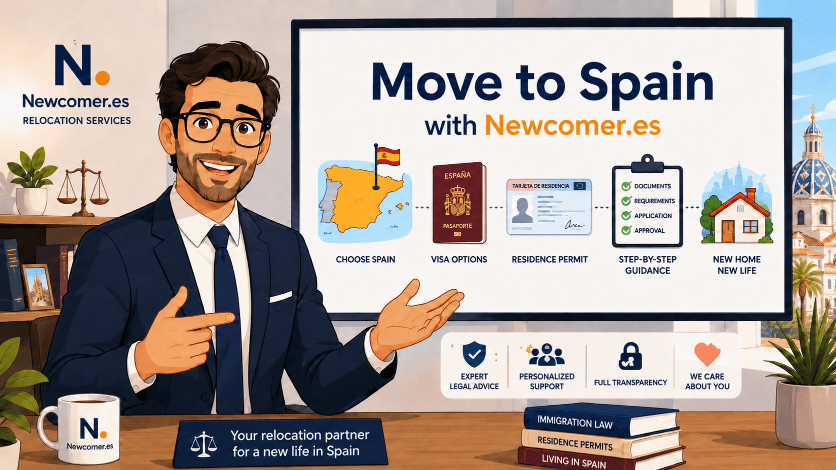
Move to Spain with one coordinated relocation service
Newcomer.es helps individuals, families, remote workers, retirees, professionals and entrepreneurs manage the practical steps of moving to Spain.
From choosing the right immigration pathway and preparing documents to finding housing, obtaining your NIE or TIE, registering locally and settling into everyday life, we help organize your relocation from start to finish.
Instead of dealing with multiple providers on your own, you get a clear plan and one point of coordination for your move to Spain.
Complete Relocation Support for Moving to Spain
Moving to Spain involves much more than obtaining a visa.
Depending on your situation, you may need to coordinate immigration, foreign documents, apostilles, translations, housing, insurance, banking, local registration, healthcare, Social Security and other administrative procedures.
Newcomer.es brings these steps together into one organized relocation plan.
We help you understand:
- What needs to be done
- Which documents you need
- When each procedure should be completed
- Which steps can be prepared before arriving in Spain
- Which registrations must be completed after arrival
- When a lawyer, tax adviser, accountant, translator or other regulated professional is required
Our goal is simple: make moving to Spain easier to understand and easier to manage.
Explore Relocation Services in Spain
Our Relocation Services in Spain
Immigration and Residency Support
Choosing the correct immigration pathway is one of the most important decisions when planning a move to Spain.
We help you understand the available options, organize the required documentation and coordinate the application process.
Common routes include:
- Digital Nomad Visa
- Non-Lucrative Visa
- Self-Employed Visa — Cuenta Propia
- Work and residence permits
- Highly Qualified Professional Permit
- Entrepreneur residence
- Student residence
- Family Reunification
- Residence for qualifying family members
- Arraigo and exceptional-circumstances routes
- Residence renewals and modifications
- Long-term residence
When regulated immigration advice or legal representation is required, we coordinate with qualified professionals.
NIE, TIE and Spanish Administration
Getting residence approval is only part of the process.
New residents often need to complete several additional procedures in Spain, including:
- NIE number
- TIE residence card
- Empadronamiento
- Immigration appointments
- Digital Certificate
- Cl@ve registration
- Social Security procedures
- Administrative forms
- Government fees
- Municipal registrations
We help you identify what applies to your situation and complete the steps in the correct order.
Documents, Apostilles and Sworn Translations
Foreign documents are often a critical part of moving to Spain.
Depending on the procedure, you may need to prepare documents such as:
- Birth certificates
- Marriage certificates
- Criminal-record certificates
- Medical certificates
- Academic records
- Employment documents
- Company documents
- Powers of attorney
- Financial evidence
Some documents may also require an apostille, legalization or sworn translation before they can be used in Spain.
Newcomer.es helps coordinate the document-preparation process so that you know what to obtain and when to obtain it.
See Documents Needed to Move to Spain
Housing and Property Support
Finding housing can be one of the most difficult parts of relocating to Spain.
Foreign residents may face additional challenges when they do not yet have Spanish payslips, local credit history or established relationships with Spanish banks and landlords.
We can assist with:
- Long-term rental searches
- Short-term accommodation
- Communication with landlords and agents
- Rental application preparation
- Area and neighbourhood research
- Utility setup
- Internet and mobile services
- Property-purchase coordination
- Relocation logistics
Family Relocation
Moving to Spain with children or other family members requires additional planning.
We help families coordinate:
- Immigration procedures
- Family documentation
- Housing
- School research
- Healthcare
- Insurance
- Local registration
- NIE and TIE procedures
- Settling-in services
The objective is to plan the move around the needs of the entire family rather than treating each procedure separately.
Banking, Healthcare and Settling In
After arriving in Spain, there are several practical systems you may need to establish.
Depending on your circumstances, this can include:
- Opening a Spanish bank account
- Health insurance
- Public healthcare registration
- Social Security
- Mobile phone service
- Internet
- Utilities
- Digital Certificate
- Cl@ve
- Driving-licence procedures
- Tax and accounting introductions
- Local professional referrals
Newcomer.es helps connect these individual tasks into one manageable arrival plan.
Business and Professional Relocation
We also support remote workers, entrepreneurs, executives, international professionals and companies relocating employees to Spain.
Support may include:
- Digital Nomad residence
- Entrepreneur residence
- Highly Qualified Professional applications
- Work and residence permits
- Company-formation coordination
- Autónomo setup coordination
- Social Security
- Employee relocation
- Family relocation
- Housing
- Banking
- Tax and accounting introductions
- Office and coworking searches
Where specialist legal, tax, labour or accounting advice is required, we coordinate with the appropriate qualified professional.
Who We Help Move to Spain
Newcomer.es supports people moving to Spain for many different reasons.
Digital Nomads and Remote Workers
Coordinate immigration, documents, Social Security considerations, housing and the practical setup required to work remotely from Spain.
Retirees
Plan residence, healthcare, insurance, housing, banking and everyday administration for retirement in Spain.
Families
Coordinate immigration, housing, schools, healthcare and registrations for the entire family.
Professionals and Executives
Manage work-related immigration, documentation and relocation for professionals moving to Spain for employment.
Entrepreneurs and Business Owners
Coordinate immigration and the practical requirements involved in establishing or operating a business in Spain.
International Students
Prepare residence documentation, accommodation, insurance and post-arrival procedures.
Companies and HR Teams
Coordinate international employee relocation together with housing and family support.
Why Choose Newcomer.es?
One Point of Coordination
A relocation may involve immigration professionals, translators, housing agents, banks, insurance providers, accountants and government offices.
Newcomer.es helps coordinate these moving parts through one relocation plan.
A Plan Built Around You
Your nationality, work situation, finances, family, destination and long-term objectives can all affect your relocation strategy.
We start with your actual circumstances rather than applying the same checklist to everyone.
Support Before and After Arrival
Relocation does not end when a visa or residence authorization is approved.
We can continue supporting you with housing, TIE procedures, empadronamiento, healthcare, banking and other practical requirements after arrival.
Specialist Support When Required
Some matters require regulated legal, tax, accounting, labour or notarial advice.
When specialist expertise is required, we help coordinate with qualified professionals.
How Moving to Spain With Newcomer.es Works
1. Tell Us About Your Move
We review where you are moving from, your nationality, family situation, work or financial circumstances, preferred destination and intended relocation date.
2. Build Your Relocation Roadmap
We identify the main immigration, documentation, housing and administrative steps involved in your move.
3. Prepare Your Documents
We help organize certificates, apostilles, translations and other supporting documentation.
4. Coordinate Applications and Procedures
We guide you through the relevant applications, appointments and administrative steps.
5. Prepare for Your Arrival
Housing, insurance, banking and other practical arrangements can be coordinated before your move.
6. Settle Into Spain
After arrival, we can continue assisting with TIE, empadronamiento, healthcare, banking, Digital Certificate and other essential procedures.
Which Spain Visa or Residence Route Is Right for You?
There is no single immigration route that is best for everyone.
The appropriate option depends on factors such as your nationality, employment, remote-work arrangements, income, savings, professional qualifications, business activity and family situation.
Some of the most common routes include:
Digital Nomad Visa
For qualifying international remote workers and professionals who want to live in Spain while working remotely.
Digital Nomad Visa Information
Non-Lucrative Visa
For qualifying non-EU residents who have sufficient financial resources and intend to live in Spain without carrying out work under this residence category.
Non-Lucrative Visa Information
Self-Employed Residence
For people planning qualifying self-employed or business activity in Spain.
Self-Employed Visa Information
Highly Qualified Professionals
For qualifying skilled professionals relocating to Spain for eligible employment.
Highly Qualified Professional Information
Family Reunification
For qualifying family members joining eligible residents in Spain.
Family Reunification Information
Relocation Services Across Spain
Newcomer.es supports relocations throughout Spain.
Popular destinations include:
- Madrid
- Barcelona
- Valencia
- Alicante
- Benidorm
- Costa Blanca
- Málaga
- Marbella
- Costa del Sol
- Murcia
- Seville
- Mallorca
- Canary Islands
Choosing where to live can affect housing costs, schools, transport, employment, healthcare, climate and lifestyle.
We can help you understand the practical differences between destinations and plan your relocation around the area that best matches your needs.
Moving to Spain Is More Than Getting a Visa
A successful relocation may involve dozens of separate decisions and administrative steps.
Your journey could include:
Immigration → Documents → Housing → Insurance → Arrival → TIE → Empadronamiento → Banking → Healthcare → Social Security → Digital Administration → Settling In
These processes are often handled by different organizations.
Newcomer.es helps bring them together into one coordinated relocation roadmap.
That is the difference between simply obtaining permission to live in Spain and actually being ready to live in Spain.
Frequently Asked Questions About Moving to Spain
What does a relocation service in Spain help with?
A relocation service can help coordinate immigration, documents, housing and the practical administrative steps involved in moving to and settling in Spain.
Newcomer.es provides support before and after arrival.
Can Newcomer.es help me choose the right Spanish visa?
Yes. We can review your circumstances and help you understand which immigration pathways may be relevant to your situation. When regulated legal advice is required, we coordinate with qualified immigration professionals.
Can you help before I arrive in Spain?
Yes. Many relocation preparations can begin before arrival, including document collection, apostilles, translations, insurance, housing research and immigration planning.
Can you help me get an NIE or TIE?
Yes. We provide practical support for NIE and TIE procedures, including document preparation and guidance around the relevant application process.
Can Newcomer.es help find housing?
Yes. Housing support can include property searches, communication with landlords or agents, rental-application preparation and relocation planning.
Do you help families moving to Spain?
Yes. Family relocation can include immigration coordination, housing, schools, healthcare, documentation and local registration.
Do you provide legal or tax advice?
Newcomer.es focuses on relocation coordination and practical administrative support. When regulated legal, tax, labour, accounting or notarial advice is required, we coordinate with qualified professionals.
Do you help companies relocate employees?
Yes. We can support companies and HR departments coordinating the relocation of international employees and their families to Spain.
Where in Spain do you provide relocation services?
Newcomer.es supports relocations across Spain, including major destinations such as Madrid, Barcelona, Valencia, Alicante, Málaga and other popular regions.
When should I start preparing to move to Spain?
It is usually better to begin planning well before your intended move. Immigration documents, foreign certificates, translations, housing and appointments can all require advance preparation.
Start Your Move to Spain
Moving countries should not mean figuring out every visa, document, appointment and administrative procedure alone.
Tell us:
Where are you moving from?
Where do you want to live in Spain?
When are you planning to move?
What do you need help with?
Newcomer.es will help you organize the next steps and build a clearer relocation roadmap.
WhatsApp Spain: +34 645 264 936
WhatsApp USA & Canada: +1 416 580 2702